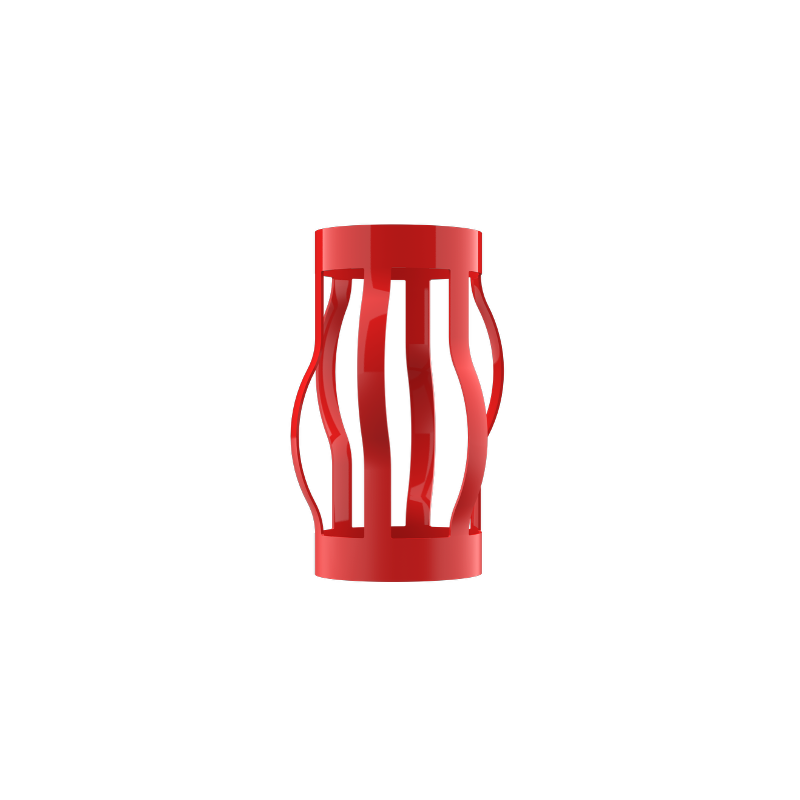
As operators pursue deeper reservoirs, longer laterals and more complex well trajectories, successful well construction depends on deploying the casing or liner to its intended depth and establishing the barriers required for the completed well.
Centralization connects these objectives. A well-designed centralizer program helps the string negotiate restrictions and reach total depth while providing the standoff needed for effective fluid displacement and cement placement.
For operators, that combination supports construction efficiency, long-term well integrity and the opportunity to realize the intended value of the well
Creating the conditions for an effective cement barrier
During primary cementing, drilling fluid must be displaced so cement can occupy the required annular interval around the casing or liner.
If the pipe lies against the borehole wall, the clearance becomes uneven. Fluids can preferentially flow through the wider side, making displacement on the narrow side more difficult. Residual drilling fluid can leave channels that compromise the cement barrier and allow unwanted communication between zones.
Centralizers help maintain separation between the pipe and the borehole wall. Their restoring force, flexibility, running characteristics and spacing must work together to provide suitable standoff under the loads encountered along the wellpath.
Centek’s Sarawak case study highlights this connection between casing position, displacement and channeling risk. It demonstrates why centralization should be considered as part of the cementing design from the outset.
Cement quality contributes to structural performance
Recent research reinforces the importance of the cement sheath beyond its role in preventing fluid migration.
In its May 2026 technology focus, Journal of Petroleum Technology reported that void-free cement can increase the collapse resistance of casing/cement/casing systems by up to 200% relative to standalone casing. Referencing SPE 227913, the review also explains that voids and microannuli can substantially diminish this structural advantage.
The figure relates to particular composite systems and loading conditions; it is not a universal improvement for every cemented well or a performance claim for centralizers. Its relevance is the importance it places on cement continuity and quality.
Centralization contributes to the conditions needed for effective placement. Cement integrity also depends on slurry properties, fluid compatibility, displacement practices, pressure and temperature changes, and operational execution.
The same JPT review highlights research validating three-dimensional cement-displacement simulation in challenging geometries, reinforcing the value of assessing the actual well configuration during planning.
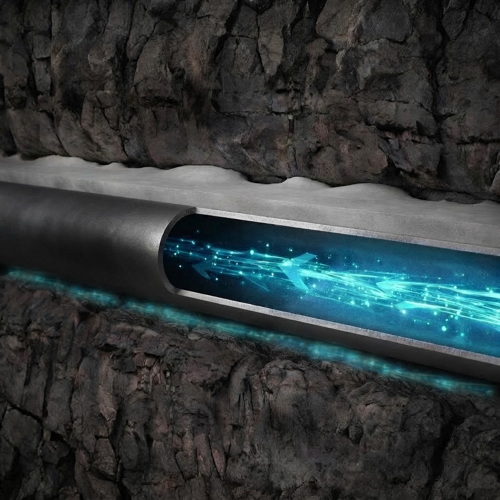
[Gas migration on poorly centralized well]
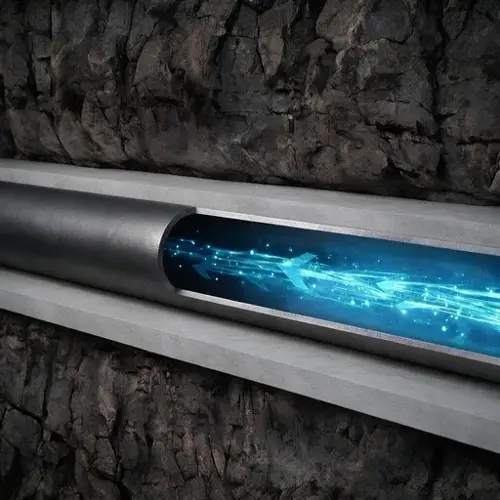
[Good cement job with zonal isolation]
Reaching TD with the required standoff: offshore Sabah
A packerless cemented monobore completion offshore Sabah, Malaysia, brings the deployment and isolation requirements together.
The operator needed to run 3½-in. tubing through existing milled windows and into 8½-in. open hole. The most demanding well reached 12,654 ft measured depth, with inclination up to 76°. The program had to manage drag, pass through the windows and provide suitable standoff for cement placement.
Because the design removed reliance on a mechanical packer, the cement sheath had particular responsibility for the required isolation barrier.
Centek combined S2 centralizers and stop collars with in-house simulation to optimize placement and assess running conditions. The case study reports successful cement placement, no tubing fill and a clean, gas-tight monobore. Cement bond log results indicated that the cementing bond objective had largely been achieved.
The application illustrates why running performance and cementing requirements need to be evaluated together.
Addressing channeling risk in Sarawak
In a separate offshore Malaysian application, an operator faced high inclination, high dogleg severity, drag and loss-prone carbonate formations.
The selected S2 centralizers combined low starting and running forces with restoring force to support casing standoff. Despite the drilling challenges and fluid losses, post-job cement bond log evaluation indicated highly competent cement behind the casing.
Centek reports that the customer subsequently standardized the S2 for future wells in similar carbonate or lost-circulation environments.
For operators, this connects the practical challenge of deploying the string with the annular conditions required for the subsequent cement job.
Planning for restrictions and changing hole size
A centralizer must accommodate the restrictions encountered during deployment while performing in the interval where cement is required.
In Norway’s Gullfaks Sør field, an operator was concerned that washed-out sections were compromising zonal isolation. Centek and Halliburton recommended over-gauge UROS centralizers to improve standoff in the enlarged sections while passing the tighter restrictions above.
Testing and modeling supported the selection. The centralizers negotiated the restrictions and endured rotation and multiple trips, allowing the liner to reach TD and effective cementing to be achieved.
In another North Sea application, a Danish operator combined UROS centralizers, tailored spacing, torque-and-drag modeling and three-dimensional cement-displacement simulation. Casing reached TD within the simulated parameters, with no unexpected drag, and the published case study reports that the required cement coverage was achieved.
These examples demonstrate the value of selecting and positioning centralizers for the full wellpath.
Protecting the operator’s investment
The value of centralization extends across deployment and cementing. Reaching the planned setting depth supports the intended well architecture. Providing suitable standoff supports displacement and cement placement. Together, these outcomes help establish the foundation for reliable well performance.
For 25 years, Centek has developed centralization solutions for demanding well environments worldwide. Its field experience, simulation capability and service-company network—including Halliburton, SLB and Baker Hughes—support an approach built around the requirements of each well.
As well designs become more demanding, centralization deserves attention early in planning: helping the string reach its intended depth and providing the standoff required to support an effective cement barrier.
Get in touch to discuss your next cementing challenge.