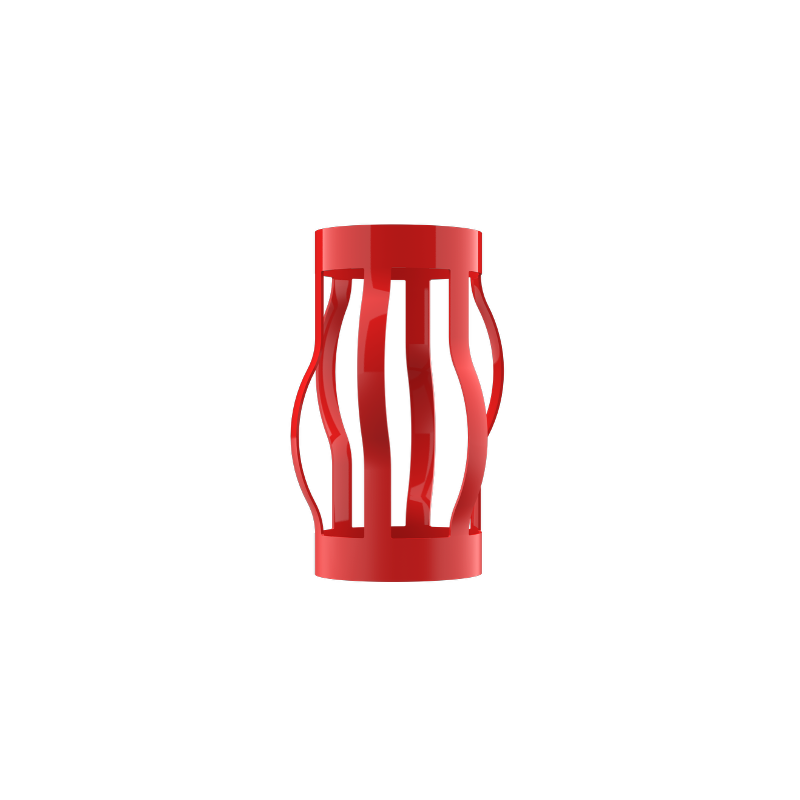
Reliable centralization depends on the materials used throughout the assembly. The steel in a centralizer or stop collar, the coating protecting its surface and the set screws securing it to casing each have a distinct role. Their selection must account for both the loads encountered during casing installation and the environment in which they will operate.
For bow spring centralizers, steel specification and heat treatment support strength, flexibility and spring recovery. Stop collars require strength and toughness to withstand retention loads, while their set screws must provide dependable grip and appropriate compatibility with the casing material. Protective coatings help preserve components during storage, transportation and deployment.
These choices are closely connected. Material selection must consider how each component is manufactured, treated and tested, as well as how different materials interact when assembled on casing. At Centek, this approach brings together proprietary alloy steel, controlled heat treatment, protective coatings and carefully selected fasteners, supported by material verification and batch control.
Specifying steel for the job
A bow spring centralizer must deflect under load and recover as clearance increases. The steel needs sufficient yield strength to resist permanent deformation, together with the toughness and ductility needed to accommodate demanding running conditions. Surface quality and material cleanliness also matter, particularly where a component experiences repeated loading.
Stop collars have a different function. Their bodies, joints and fastening arrangements must withstand the loads involved in retaining centralizers on casing. Material selection must support that structural strength, while the complete assembly must deliver the required holding force when correctly installed.
These requirements make the steel specification part of product development. Chemical composition, material condition and dimensional consistency influence how the steel can be formed, processed and used. Selecting a suitable material gives the manufacturer a controlled foundation for developing reliable products.
Centek's UK- and USA-built centralizers use proprietary alloy steel sourced from the US and Europe. The steel specification is matched to Centek's manufacturing and heat-treatment processes to support consistent mechanical properties and finished-product performance.
Matching steel to heat treatment
Steel specification and heat treatment must be developed together. Different steels respond differently to heating and cooling, so a successful process depends on understanding the material being treated and the properties required in the finished component.
For bow spring centralizers, the aim is a controlled balance of strength, toughness and spring recovery. Excessive brittleness can compromise durability; insufficient resistance to permanent deformation can compromise the bow's ability to recover and maintain standoff.
Centek's centralizers and stop collars are heat treated to develop the mechanical properties required for their respective roles. For bow spring centralizers, this supports strength, flexibility and spring recovery. For stop collars, heat treatment develops strength and toughness while reducing brittleness, helping the collar body withstand the loads associated with retaining centralizers on casing.
Centek's proprietary heat-treatment process is aligned to its steel. Consistent starting material helps that process produce repeatable results across production batches.
Verifying the steel in Centek's own laboratory
Verification begins before manufacturing. Centek carries out incoming-steel chemical analysis on every batch of steel received at the factory. This checks the material's composition against the required specification and provides a controlled starting point for production and heat treatment.
Testing continues after processing. Samples from every heat-treatment batch are tested in Centek's onsite laboratory for hardness and the development of the required martensitic microstructure. These checks verify the treated steel's condition and support consistent manufacturing quality.
Checking both the incoming chemistry and the properties achieved after heat treatment helps verify that the intended material has been supplied and that processing has produced the required result.
Dimensional checks before and after heat treatment also verify inner and outer diameters and concentricity. Each product is hard stamped with a batch number traceable to its manufacturing date, connecting the physical product to its production history.
Material checks and finished-product tests answer different questions. Laboratory testing verifies the treated steel; product testing assesses how the manufactured component behaves under load. Centek's testing includes centralizer restoring-force and axial-compression tests, alongside stop-collar tests that assess strength and toughness, including potential weaknesses at screw threads and joints.
Together, these checks connect material properties to the performance of the finished design.
Traceability through the supply chain
Reliable material sourcing depends on knowing what has been supplied and retaining that information through production. A robust traceability system should connect the steel's origin and material certification with manufacturing batches, heat-treatment records and inspection results.
This gives manufacturers a basis for verifying conformity, investigating variation and identifying affected products if a concern arises. It also supports repeat orders by preserving the evidence behind an established specification.
Centek's batch identification provides an important part of that control. For customers, documented traceability supports confidence that manufacturing quality can be examined and verified.
Protecting the steel against corrosion
Mechanical strength and corrosion protection must both be considered. Products can encounter moisture, salt-laden air and repeated handling during storage and transportation, before they reach the wellsite.
Protective finishes therefore form part of the overall material strategy. Their effectiveness depends on suitable surface preparation, adhesion and coverage, particularly around edges and complex profiles.
Centek applies a specialist anti-corrosive powder-coating system to its centralizers, incorporating a primer and enhanced edge coverage. The coating has been tested using the parameters and methodology of BS EN 60068-2-52:2018, Test Kb, Method 4. This complements the steel's mechanical properties by helping protect the product during its journey to installation.
Set screw materials and secure casing grip
The material specification extends to the grub screws, or set screws, that secure a stop collar to casing. Their material must support the strength and contact hardness needed to develop grip under the specified installation torque, while maintaining the integrity of the screw and its threads.
Centek uses specially selected steel set screws with a cup-point design. Material selection works together with the contact geometry, thread form and pitch to support the required axial holding force. The aim is reliable retention while limiting excessive damage to the tubular surface.
Centek also offers stainless steel set screws for the majority of its stop collars, allowing fastener selection to account for corrosion compatibility, particularly with chrome or CRA tubulars. Screw selection should consider both holding requirements and the materials at the casing and collar interfaces.
Quality supported by certified management systems
Centek Ltd in the UK and Centek Inc. in the USA are certified to ISO 9001:2015, the international standard for quality management systems. This provides a framework for consistent processes, customer satisfaction and continual improvement.
For steel-based centralizers and stop collars, Centek puts that commitment into practice through incoming material verification, controlled manufacturing, post-heat-treatment laboratory testing and documented batch identification. These controls help maintain consistency from material receipt through to finished-product inspection.
Confidence built into production
Steel specification matters because performance depends on the relationship between material, design and manufacturing. Controlled sourcing establishes the starting point. Heat treatment develops the required properties. Laboratory checks, batch identification and product testing provide evidence of the result.
For centralizers and stop collars, that discipline supports dependable equipment: bows that recover to provide standoff and collars with the strength needed to support secure retention. It gives operators a stronger basis for selecting products for demanding casing runs.