Suriname's offshore sector continues to move from exploration success toward first oil. TotalEnergies' GranMorgu development in Block 58 advanced through financing, subsea equipment, FPSO construction and workforce preparation in the first half of 2026, and remains on track for first oil in 2028.
The scale of the undertaking is substantial. GranMorgu will develop the Sapakara and Krabdagu discoveries, holding an estimated 760 million barrels of recoverable resources, tied back to an all-electric FPSO with a design capacity of 220,000 barrels per day and gas-processing capacity of 500 million cubic feet per day.
In July 2026, TotalEnergies awarded Halliburton an integrated drilling and completion contract covering drilling, well completions and digital workflows for the project, while SBM Offshore and Technip Energies continue delivering the FPSO.
The activity extends beyond Block 58. TotalEnergies is planning a new exploration campaign on the block in 2027, and has expanded its footprint further with a stake in the adjacent Block 53. Next door, PETRONAS has logged eight discoveries across its Block 52 acreage, with a final investment decision expected before the end of 2026.
Centralization Challenges in Suriname
For centralization, GranMorgu’s profile brings a familiar set of engineering questions: subsea wellheads, water depths ranging from roughly 100 to 1,000 meters, and multiple casing strings run in sequence. Each string has to reach setting depth while passing restrictions, maintaining standoff and keeping running forces within manageable limits.
After supporting Guyana’s early offshore exploration, Centek extended that regional involvement into Suriname. The company has supported offshore activity there since the country’s early exploration campaigns, supplying centralizers and stop collars across complete casing strings.
Centek has also provided well-specific simulations for Suriname wells, using actual geometry and trajectory to compare product and spacing options, predict standoff and running forces, and identify where specialist high-performance solutions are justified—and where a more cost-effective product can meet the requirements of a less challenging section.
Relevant Examples
That direct regional experience is complemented by offshore case studies from other basins. They show how specific restrictions, changing well programs and unexpected operational events have been addressed, providing additional evidence for decisions that still need to be made well by well.
Offshore Uruguay offers a close parallel to Suriname's own path from exploration into development, since the well design itself was still in flux when the centralizers were selected. The operator wasn't yet certain whether a 16-in. contingency liner would be needed; if it was, it would add a further restriction ahead of the 13 5/8-in. casing string that followed. Rather than stock centralizer subs for a configuration that might never be run, the operator equipped more than 20 UROS-CT units offline, capable of passing the well whichever way the design settled. The casing reached total depth, cemented without incident, and the centralization solution delivered savings Centek puts at more than US$250,000 across the 13 5/8-in. and 9 7/8-in. strings. Uruguay case study
An offshore application in the Nigerian Agbami Field provides a relevant example of the TUR performance in a deepwater, under-reamed well. The operator needed to run 13 5/8-in. casing through a 16-in. casing string with an internal diameter restricted to 14.823 in. before entering a 17 1/2-in. open-hole section. Centek TUR centralizers compressed to travel through the restriction for 9,250 ft and then recovered to gauge in the larger open hole, providing the centralization required for the casing string. The casing reached depth successfully, with the operator reporting a three-day rig-time saving compared with conventional centralizers. This demonstrates the product’s ability to negotiate an extended restriction and recover effectively in the target hole section. Agbami TUR case study
Water depth brought its own set of demands in the Gulf of Mexico, where a 13 3/8-in. liner had to clear a subsea wellhead in over 8,000 ft of water before threading a 14 3/4-in. drift restriction further down the string. Fifteen UROS-CT centralizers, fitted offline ahead of shipment to the rig, carried the liner to a total depth beyond 12,500 ft at a 70° inclination, after which the annulus circulated clean and the cement job went ahead as designed. Gulf of Mexico case study
A Malaysian deepwater well shows what happens when a subsea wellhead restriction does not go entirely to plan. An FMC sub-mudline receptacle created a 17.183-in. restriction inside 20-in. casing at roughly 920 m, and Centek TUR centralizers cleared it without trouble on the way in on a 600 m liner section. When a separate hanger problem required the liner to be pulled, the centralizers passed back through the same restriction, were re-run and cleared it again—a useful demonstration of product recovery when an operation needs a second attempt. Malaysia case study
Different basins and well designs, but the underlying test is consistent: will the equipment clear the planned restrictions, provide the required standoff, keep running forces manageable and still perform if the operation does not proceed exactly as planned?
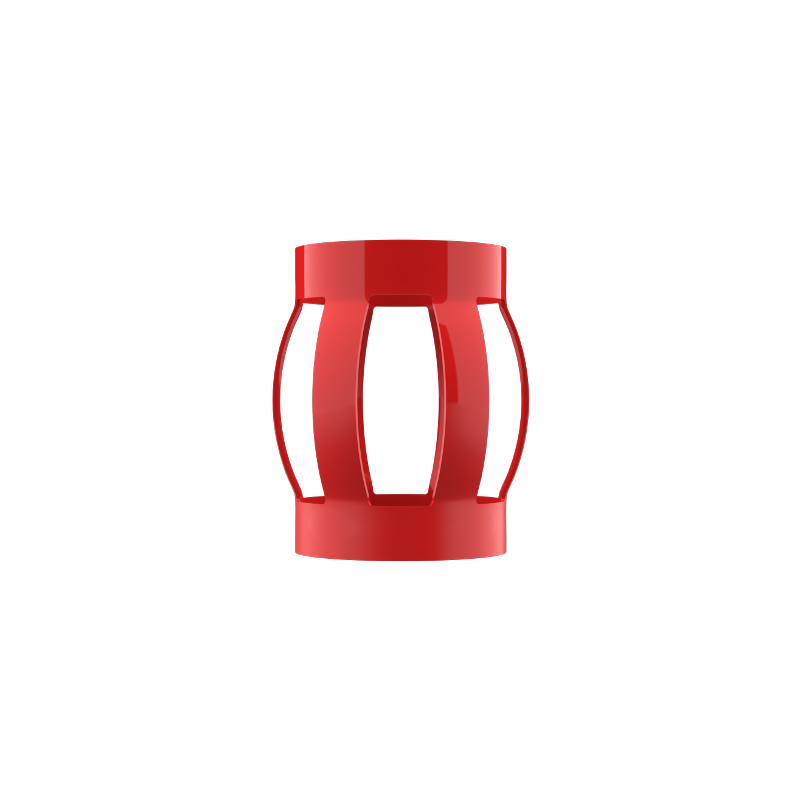
Centek’s UROS and TUR families cover under-reamed and close-tolerance applications, while S2 supports other demanding casing-running requirements. More cost-effective options include the new ES single-piece bow spring centralizer for less challenging intervals and large-diameter hinged bow spring centralizers for surface sections, paired with the appropriate stop collars. Simulation connects these product capabilities to well economics, helping operators avoid a one-product-fits-all approach and select the most cost-effective solution for each section.
As Suriname shifts from exploration toward sustained development, Centek brings continuity: established regional supply, complete-string centralization support and well-specific simulation—reinforced by field evidence from other offshore basins.
Planning your next casing string offshore Suriname? Build on Centek’s in-region experience with a free simulation.
Compare centralizer and spacing options, assess predicted standoff and running forces, and identify where high-performance equipment is required—or where a more cost-effective solution can meet the demands of a less challenging section.